
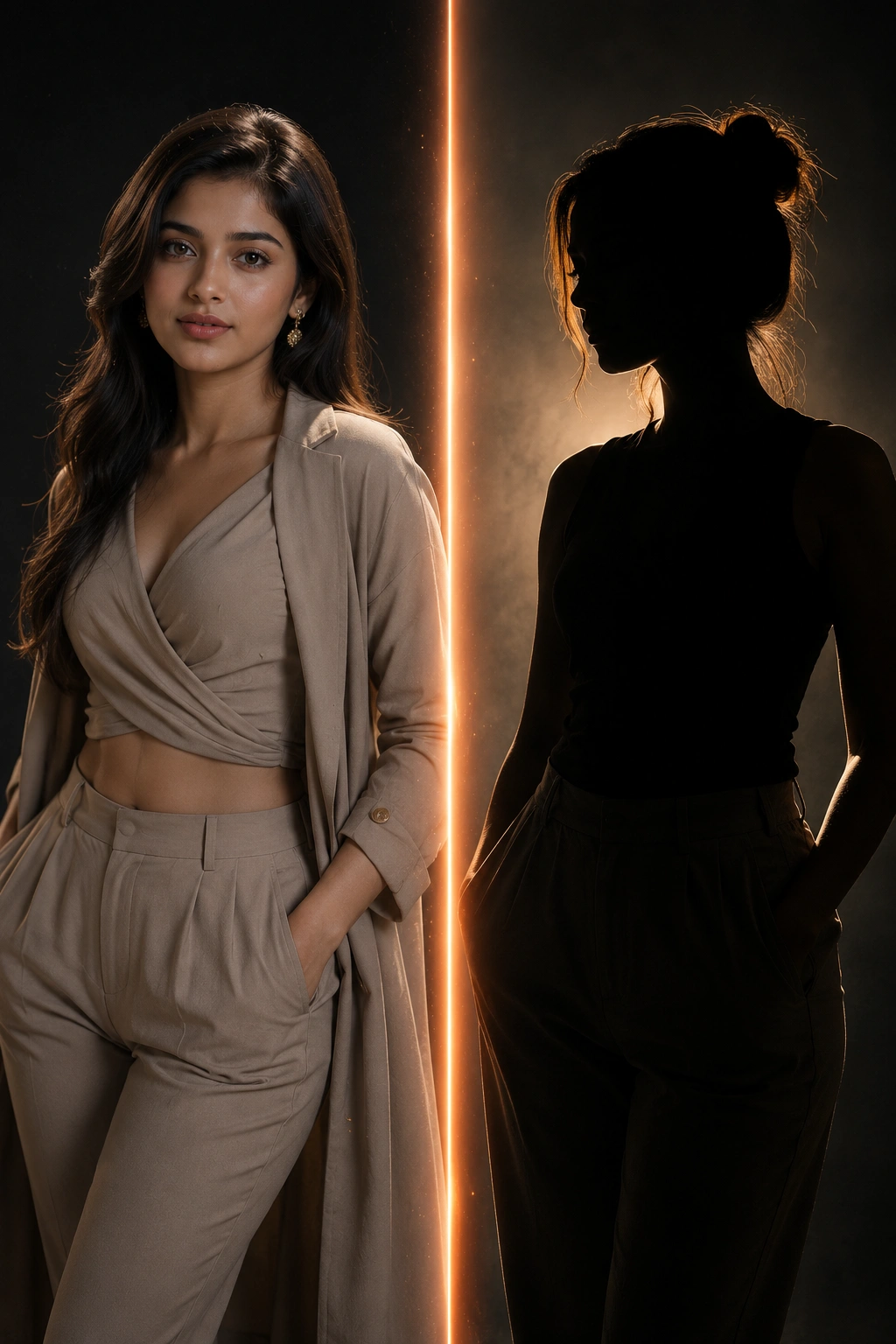
If you've ever priced a model shoot in Ahmedabad or Mumbai, you know the numbers can move fast — studio hire, hair and makeup, model fees, photographer, retouching, and then the revision rounds. AI model photoshoots entered the conversation precisely because they bypass that entire chain. But is the result good enough to replace real model photography, or does it serve a different purpose entirely?
What an AI Model Shoot Actually Involves
An AI model shoot uses generative AI tools to create a photorealistic human figure styled for your product. You send Tegvo your product images, specify the model look you want — skin tone, hair, expression, outfit category — and the background or environment. The AI produces the model wearing or holding your product in the specified context.
For video, the AI model can be animated to show natural movement — a hand turning a ring, a gentle head turn wearing earrings, a model walking in a lehenga. The output looks like a professional studio shoot because the lighting, framing and styling are directed just as carefully — it's just that no physical set or talent was involved.
Tegvo's AI models Tia are built for Indian aesthetics — South Asian skin tones, traditional and contemporary styling, and the kind of jewellery and fashion contexts that resonate with buyers in Gujarat, Maharashtra and across India.
What a Traditional Model Shoot Still Does Best
A real model brings something AI currently cannot fully replicate: spontaneous human expression. The slight smile that lands authentically in frame. The natural drape of a saree adjusted by the wearer's own hands. The genuine warmth that a luxury jewellery brand needs in its annual campaign imagery.
For editorial shoots — the kind that appear in print, on hoardings, or in a brand's flagship campaign — the investment in a real model shoot is still justified by the emotional depth and perceived premium status it conveys. High-end bridal jewellery, couture fashion and hospitality brands targeting premium segments will often find that real model imagery performs better in the contexts where brand prestige matters most.
Cost Comparison: AI vs Traditional
| Factor | AI Model (Tegvo) | Traditional Model Shoot |
|---|---|---|
| Cost per project | ₹2,000–₹8,000 | ₹20,000–₹1,50,000+ |
| Turnaround | 24–72 hours | 1–3 weeks |
| Brand control | Total — any look, background, angle | Limited by talent, location, time |
| Human authenticity | Medium — very realistic but AI-generated | Maximum |
| Scalability | Unlimited — 50 looks same cost | Each shoot is a new cost |
| Seasonal speed | Brief on Monday, post by Wednesday | Book weeks in advance |
| Best for | Catalogue, social, WhatsApp, D2C ads | Marquee campaigns, editorial, print |
When to Choose an AI Model
AI model photography is the right choice when you need volume, speed or variety that a traditional shoot cannot provide affordably. Seasonal product drops — Navratri collections, Diwali gift sets, new jewellery arrivals — need imagery within days, not weeks. AI delivers that without the scheduling friction of booking talent, studio and photographer simultaneously.
AI is also the right choice for testing. If you're launching a new product and want to see how it looks in five different styling contexts before committing to a premium shoot, AI model visuals give you that exploration cheaply. You find the winner, then optionally invest in a traditional shoot for that specific look if the campaign warrants it.
When a Real Model Is Worth the Investment
The cases where real model photography justifies the cost are narrower than many brands assume, but they are real. High-end bridal jewellery shown in a real model campaign carries a prestige signal that buyers in that segment recognise and respond to. Fashion brands with complex garment drape — silk sarees, structured lehengas, structured suiting — sometimes find that real movement captures dimension that AI currently approximates rather than matches precisely.
Brands that have built their identity around a specific human face — a known model, a founder, a recurring ambassador — obviously need real-model photography to maintain continuity with their established visual brand.
Send your product images and a brief on WhatsApp — Tegvo will show you what's possible.
How Smart Brands Use Both
The most practical approach — and the one most growing Indian brands are landing on — is to use AI model visuals for the high-volume, high-cadence content layer (social posts, WhatsApp catalogue, Meta ads, website product pages) while investing in a real model shoot once or twice a year for a marquee campaign or brand refresh.
This hybrid approach keeps your content pipeline full throughout the year without the cost of repeated traditional shoots, while ensuring you have genuine editorial-grade imagery for the moments that define your brand's premium positioning. Many Ahmedabad jewellery brands and Surat fashion houses have already adopted this model with strong results.
How the AI Model Process Works at Tegvo
Brief Tegvo on WhatsApp with: your product images, the desired model look (skin tone, hair, expression category), the background or environment, and the intended use (social, website, Meta ads). Within 24 hours, Tegvo shares a concept confirmation. You approve or refine, and the final visuals are delivered within 48–72 hours total.
Output formats for video include 9:16 for Reels and WhatsApp Status, 1:1 for feed, and 16:9 for website or YouTube. Still frames can be extracted from video for use in static formats. Full commercial rights are included — use the visuals on any platform without additional licensing.
Frequently Asked Questions
What is an AI model for fashion or jewellery photography?
An AI model is a digitally generated human figure produced using AI image and video generation tools. The model can be styled in any outfit, jewellery, hair and makeup, placed in any environment and filmed at any angle — without a physical shoot. Tegvo's models Tia are built specifically for Indian brand aesthetics.
Can AI models show jewellery detail as clearly as real model photos?
For earrings, necklaces, bangles and rings, AI model visuals show wearable context and styling very effectively. For extreme close-up macro detail — individual stone facets, hallmark engravings or precise metal texture — a dedicated product macro shot gives sharper results than either AI or real model photography.
Is there a legal concern about using AI models in Indian advertisements?
As of 2026, India does not have specific legislation prohibiting AI-generated models in advertising, provided no real person is misrepresented. Best practice is to avoid implying the AI model is a specific real individual and to follow platform guidelines on AI content labelling for paid promotions. Consult your legal adviser for regulated product categories such as finance or pharmaceuticals.
Can I specify skin tone, hair colour or outfit style for the AI model?
Yes — completely. When briefing Tegvo, you can specify skin tone, hair style, outfit category, jewellery type and aesthetic mood. This level of control is a key advantage over traditional shoots, where casting is limited by available talent, schedules and budget.
What turnaround time should I expect for AI model product visuals?
Tegvo delivers AI model video content in 24–72 hours from brief approval. Traditional model photoshoots with comparable post-production generally take 1–3 weeks. For seasonal campaigns, the speed difference alone often makes AI the only viable option for tight timelines.
Are international brands using AI models in mainstream advertising?
Yes — several global fashion, beauty and retail brands have used AI-generated models for catalogue content, digital advertising and social campaigns since 2023. The practice is growing rapidly in India, particularly among D2C brands, jewellery retailers and fashion labels producing high volumes of content without repeated shoot costs.
