
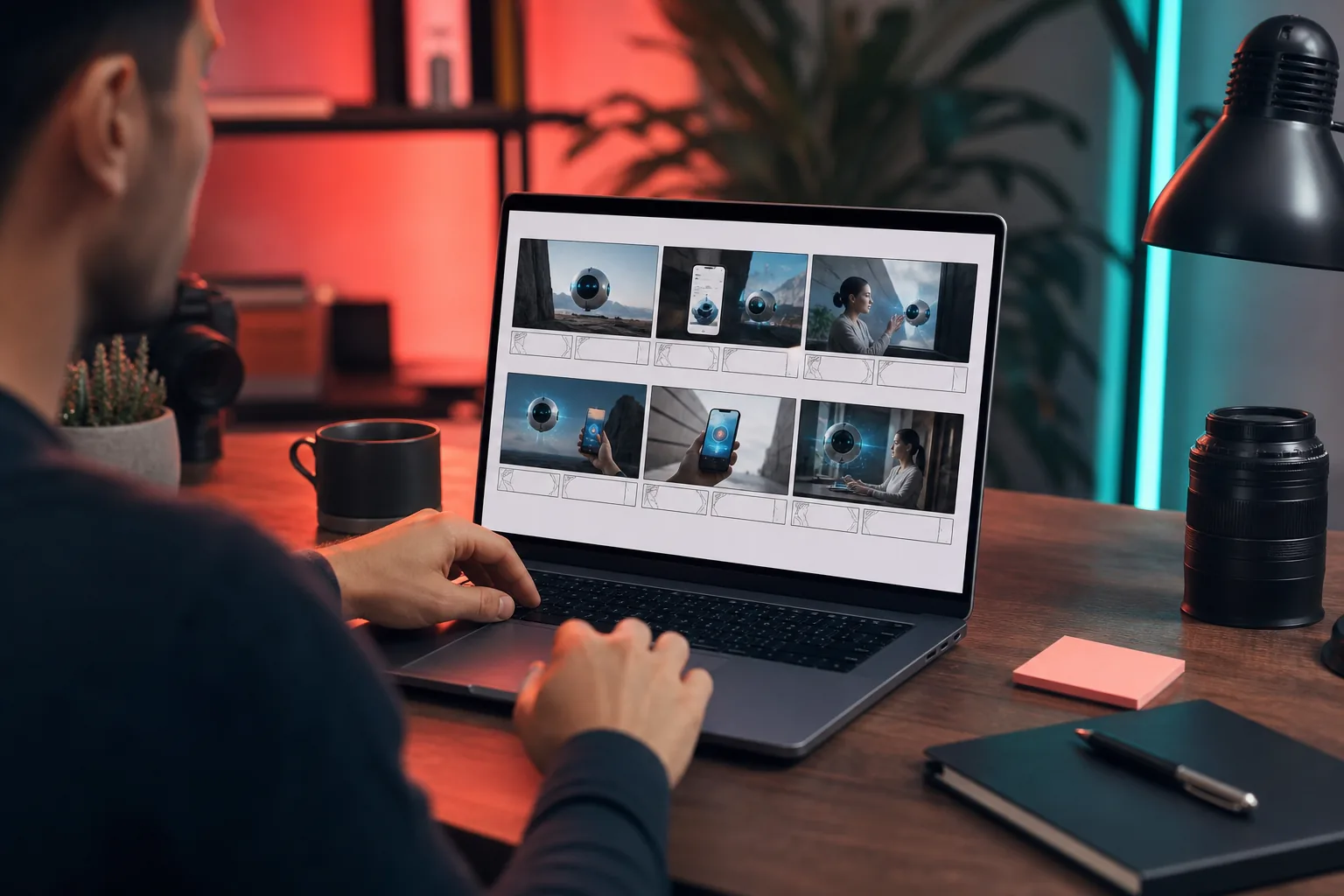
The difference between a generic AI product clip and a scroll-stopping ad that drives orders is almost always the brief. AI video studios do not read minds — they read prompts. Whether you sell jewellery on CG Road, sarees from Surat, hotel suites in Ahmedabad or D2C beauty products shipping across India, learning to write a clear, specific AI video prompt will save you money, revision rounds and production time. This guide gives you the exact framework and 10+ real examples you can use immediately.
Why the prompt matters more than the tool
In 2026, multiple AI video tools can produce technically competent product footage. What separates a generic output from a conversion-driving ad is not which platform generated it — it is how precisely the brief described the product, the buyer, the mood and the platform it will run on. A vague prompt produces a vague video. A specific prompt produces a specific video that speaks directly to a specific buyer at a specific moment.
Think of it this way: a human videographer would ask you dozens of questions before picking up a camera — product details, model direction, lighting mood, target audience, what you want viewers to feel, what action you want them to take. A strong AI video prompt answers all of those questions in writing before production begins. The more complete your brief, the fewer revision rounds you need and the faster you go from idea to published content.
The 5-part product ad prompt framework
Use this structure every time you brief an AI video studio or write a prompt yourself. Each part answers a specific production question:
Part 1 — Product description
Describe the physical product with enough specificity that a visual artist could recreate it without seeing it: material, colour, finish, hero detail. Not "gold necklace." "22K gold bridal necklace with polki stones and meenakari enamel work, maroon and green colour combination, heavy chest piece." Include close-up photos of hero details (stone type, embroidery, texture, packaging) as attachments to your brief — visual reference always supplements text description.
Part 2 — Model and styling direction
Describe the person who represents your buyer or aspiration: age range, complexion range if relevant to the product's target market, outfit mood, hair and styling direction, cultural context. Not "a model." "Indian woman, early 30s, bridal styling, heavy silk saree in deep red, traditional gold earrings, hair pinned with flowers, classical and elegant." For jewellery and ethnic wear, cultural specificity makes the creative significantly more relevant to Gujarat and India buyers.
Part 3 — Scene and setting
Describe where the scene takes place and what the background communicates about the product's lifestyle position: studio control, festive energy, luxury property, outdoor golden hour. Not "nice background." "Heritage haveli courtyard, dusk lighting, warm amber and terracotta tones, softly lit archways visible in background, festive atmosphere without being busy or cluttered."
Part 4 — Camera, motion and pacing
Describe how the camera should move and how fast the edit should feel: aspect ratio, camera movement type, close-up vs. wide shot balance, overall edit pace. Not "slow motion." "9:16 vertical, slow orbital camera movement around the jewellery, close-up inserts on stone details and necklace sparkle, 25-second total duration, pace feels elegant not rushed." Also specify aspect ratio explicitly — 9:16 for Reels and WhatsApp, 16:9 for YouTube or website hero video, 1:1 for Instagram grid posts.
Part 5 — Platform, CTA intent and campaign context
Tell the studio where this video will run, what action you want viewers to take, and whether it is for an organic post, a paid ad or a WhatsApp catalog. Not "for social media." "For Instagram Reels and Meta paid ads, Diwali sale campaign, end card should include 'Shop Now' CTA overlay, WhatsApp number visible in final 5 seconds, safe zone respected for Meta ad placement."
10 example prompts by product category
These are production-ready prompt structures you can adapt for your own brief. Replace the specifics with your product details:
1. Bridal jewellery — Instagram Reels
"9:16 Reels format, 25 seconds. Bridal gold necklace set with uncut polki diamonds and jadau work. Indian model, early 30s, deep maroon bridal lehenga, traditional heavy jewellery styling. Heritage palace terrace setting, warm golden hour light. Slow orbital camera movement, close-up sparkle inserts on stones. Premium elegant pace. No text overlays. For Diwali bridal campaign — aspirational, not promotional."
2. Festive ethnic wear — Navratri Chaniya Choli
"9:16 vertical, 20 seconds. Bright mirror-work chaniya choli in coral and gold. Indian model, early 20s, energetic festive styling, flowers in hair, festive bangles. Outdoor garba-ground atmosphere, warm evening lighting with fairy lights in background. Dynamic movement matching garba music tempo — spins and swirls to show drape. Bold and energetic pace, Gen Z festive mood. Caption: 'Navratri Ready — DM to Order.'"
3. Luxury hotel suite — OTA listing and Reels
"16:9 horizontal (for OTA) and 9:16 vertical cut (for Reels). 30 seconds. Business hotel suite in Ahmedabad or tier-1 city. Morning light through floor-to-ceiling windows, city skyline visible. Cinematic slow walkthrough — entrance, lounge area, king bed with white linen, bathroom marble. Calm, aspirational luxury tone. No model needed. Soft piano or ambient music. No text overlays in video. For Booking.com and OYO listing hero video + Instagram Reels."
4. D2C perfume / fragrance
"9:16 vertical, 20 seconds. Glass perfume bottle hero — dark moody backdrop, deep navy to black gradient. Model silhouette (not full face focus) in elegant black outfit. Specular light reflections on the bottle, scent-mist visual effect. Slow, cinematic pace — feels premium, European-inspired. No product copy in video itself. For paid Meta ad — end card with brand name and 'Shop Now' CTA. Test three colour grading variants: gold-noir, silver-cool, warm amber."
5. Fashion saree — WhatsApp catalog
"9:16 vertical, 15 seconds for WhatsApp Status. Pure silk saree, deep teal with gold zari border. Indian model, 35–45 age range, traditional drape, gold earrings. Clean studio white background with soft warm light. Simple slow turn, drape detail close-up. Sophisticated, not overtly festive — suitable for formal occasions and Diwali gifting. End with product name and WhatsApp number overlay for catalog. 3 variants: front look, drape detail, pallav close-up."
6. Restaurant / food marketing
"9:16 vertical, 20 seconds. Ahmedabad restaurant — Gujarati thali hero shot. Multiple dishes arriving at the table in sequence, slow overhead drizzle shots of daal and ghee, steam rising from fresh rotis. Warm amber restaurant lighting, dark wood tables, traditional brass thali. No model, food as hero. Mouth-watering pace — slow but engaging. For Reels and Zomato listing. Caption: 'Order Your Thali — Link in Bio.'"
7. Artificial jewellery — budget festive
"9:16 Reels, 18 seconds. Affordable Navratri jhumka earrings set, antique gold finish. Young model, early 20s, white kurti so earrings are clearly visible. Bright studio backdrop in festive yellow-orange. Close-up ear detail shots, light sparkle effect. Fast and energetic pace, Instagram trend-friendly. End card: price ₹399 + 'DM ORDER' CTA. For Instagram Reels organic and paid boost."
8. Real estate / property — site tour
"16:9 horizontal and 9:16 vertical version. 45-second property walkthrough. 2BHK apartment, Ahmedabad South Bopal or SG Highway area. Clean, modern interior. Morning light. Cinematic slow walkthrough: entrance hall → living room → kitchen → master bedroom → balcony with view. Neutral modern décor, aspirational but realistic. No voiceover in video. For Magicbricks listing and Instagram Reels. Add 'RERA Approved' text overlay on last 5 seconds."
9. Beauty / skincare product — Meta ads
"9:16 vertical, 15 seconds. Face serum in dropper bottle, amber glass. Model (Indian, 28–35, natural minimal makeup to let skin glow speak). Clean white studio, bright natural light. Hero shot of serum bottle → close-up skin application on cheekbone → before/after comparison frame. Upbeat but not aggressive pace. For Meta paid ads — safe zone respected, no branding overlays inside central frame. CTA: 'Shop on Website' or 'Offer on Amazon.'"
10. WhatsApp video catalog reel — jewellery brand
"9:16 vertical, 20 seconds. Showcase 3 jewellery pieces in sequence: necklace, earrings, bangles. Same Indian model, same neutral-glam makeup and white kurta. Studio white background, consistent lighting across all 3 cuts. Each piece gets 5-6 seconds of screen time — slow turn then close-up sparkle shot. End card: brand name + 'WhatsApp: 98765XXXXX' + price range '₹1,200 – ₹8,500'. For WhatsApp catalog and Instagram carousel."
Common prompt mistakes that waste revision rounds
- "Make it nice" / "make it viral": These phrases communicate nothing about product, audience or platform. Every second spent on subjective direction is a second not spent on specific output. Replace with concrete visual language.
- Missing product photos: Text describes; photos show. Always attach your best product images — close-up detail shots are more valuable than wide shots for brief accuracy.
- Ten scenes in one 15-second reel: A 15-second reel can hold 3–4 shots at comfortable pacing. Requesting 8 scene changes produces rushed, choppy content that does not perform. Be realistic about duration vs. content density.
- Wrong aspect ratio for platform: Reels and WhatsApp Status are 9:16 vertical. YouTube and website hero videos are 16:9. Specifying this upfront avoids the entire video needing to be reframed in post.
- Same brief for every product line: A bridal jewellery buyer and a Gen Z affordable earrings buyer need completely different pacing, model direction and music tempo. Adapt your framework per collection.
- No CTA direction: Every ad video should have a clear call to action — whether it appears as a text overlay in the final 5 seconds or as a caption direction. "DM ORDER", "Shop Now", "Book via WhatsApp" — be specific.
Platform format guide for Indian brands
| Platform | Aspect ratio | Duration | Key considerations |
|---|---|---|---|
| Instagram Reels (organic) | 9:16 vertical | 15–60 seconds | Hook in first 2 seconds; keep text overlays minimal |
| Meta paid ads | 9:16 vertical or 1:1 | 15–30 seconds | Respect safe zones; include clear CTA in final frame |
| WhatsApp Status | 9:16 vertical | 15–30 seconds | Product name + WhatsApp CTA overlay essential |
| YouTube Shorts | 9:16 vertical | 15–59 seconds | First frame visible as thumbnail — make it count |
| Website hero video | 16:9 horizontal | 20–60 seconds | No dialogue; works muted; fast loading (<10MB) |
| OTA listing (Booking, MakeMyTrip) | 16:9 horizontal | 30–90 seconds | Accurate property representation; no stock backgrounds |
Prompt tips for Ahmedabad & Gujarat product brands
When briefing an AI video studio from Gujarat, local context makes a measurable difference to output relevance:
- Navratri and Gujarati wedding context: Specify "garba-energy movement", "Gujarati bridal styling", "chaniya choli drape" or "traditional groom sherwani" — these cultural specifics produce more accurate and relevant creative than generic "Indian festive."
- Surat textile and fabric context: When briefing for fabric or saree products, mention weave type (Paithani, Kanjivaram, Banarasi, pure cotton), thread count ranges or GSM weight where relevant — this helps the studio represent drape and texture accurately.
- Ahmedabad landmark backdrops: For hospitality, real estate or destination brands, specifying "Ahmedabad heritage old city", "SG Highway modern commercial", "Sabarmati Riverfront" or "GIFT City skyline" creates geographically relevant content for local audiences.
- WhatsApp-first CTA for Gujarat: Gujarat businesses close most sales on WhatsApp. Always brief with a WhatsApp number CTA in the final frame — even for ads that drive to a website, the phone number builds trust with buyers who prefer to inquire before purchasing.
Studios like Tegvo — based in Ahmedabad — understand Gujarat's product categories and buyer culture. We translate plain-language WhatsApp briefs into production-ready AI video ads for jewellery labels, ethnic wear brands, hotels, restaurants and D2C businesses across Gujarat and pan-India.
Frequently Asked Questions
Do I need any technical AI knowledge to brief a video studio?
None at all. The 5-part framework in this guide is written in plain business language — no prompting jargon, no tool-specific syntax. Describe your product, your buyer, your scene and your platform. Studios like Tegvo translate that into production-ready video. The more specific your language, the fewer revision rounds needed — but you never need to understand how the AI tool itself works.
How many revision rounds are included in a typical brief?
Most AI video production projects include 2 standard revision rounds covering pacing adjustments, colour grading changes, text overlay edits and music swaps. Major changes — different scene, different model direction, different aspect ratio — that result from an incomplete initial brief may require additional rounds. Using the 5-part framework and providing product photos upfront reduces the likelihood of needing major revisions significantly.
Can I use one prompt structure for every product category?
Use the 5-part framework as your base structure for every category, but fill in each part with category-specific language. A bridal jewellery reel requires completely different model direction, pacing and scene than a restaurant food reel or a D2C skincare ad. The structure stays the same; the inputs change. We have provided 10 example prompts above to show how the framework adapts across categories.
What is the minimum product information needed to start a brief?
At minimum: clear product photos (minimum 3 — front, detail and packaging or full look), a one-line description of what the product does or represents, the target buyer profile in one sentence, and the platform the video will run on. Everything else can be collaborative — Tegvo will ask the right questions to fill gaps before starting production.
Can the same prompt produce both organic Reels and paid ad versions?
Yes — brief both deliverables upfront with platform-specific notes. The core creative is the same; the difference is adding a CTA overlay and ensuring safe-zone compliance (no important content in the bottom 20% of the frame) for paid ads, and keeping the format slightly more organic-feeling for non-paid Reels. Briefing both in one session saves significant cost vs. briefing them separately.