
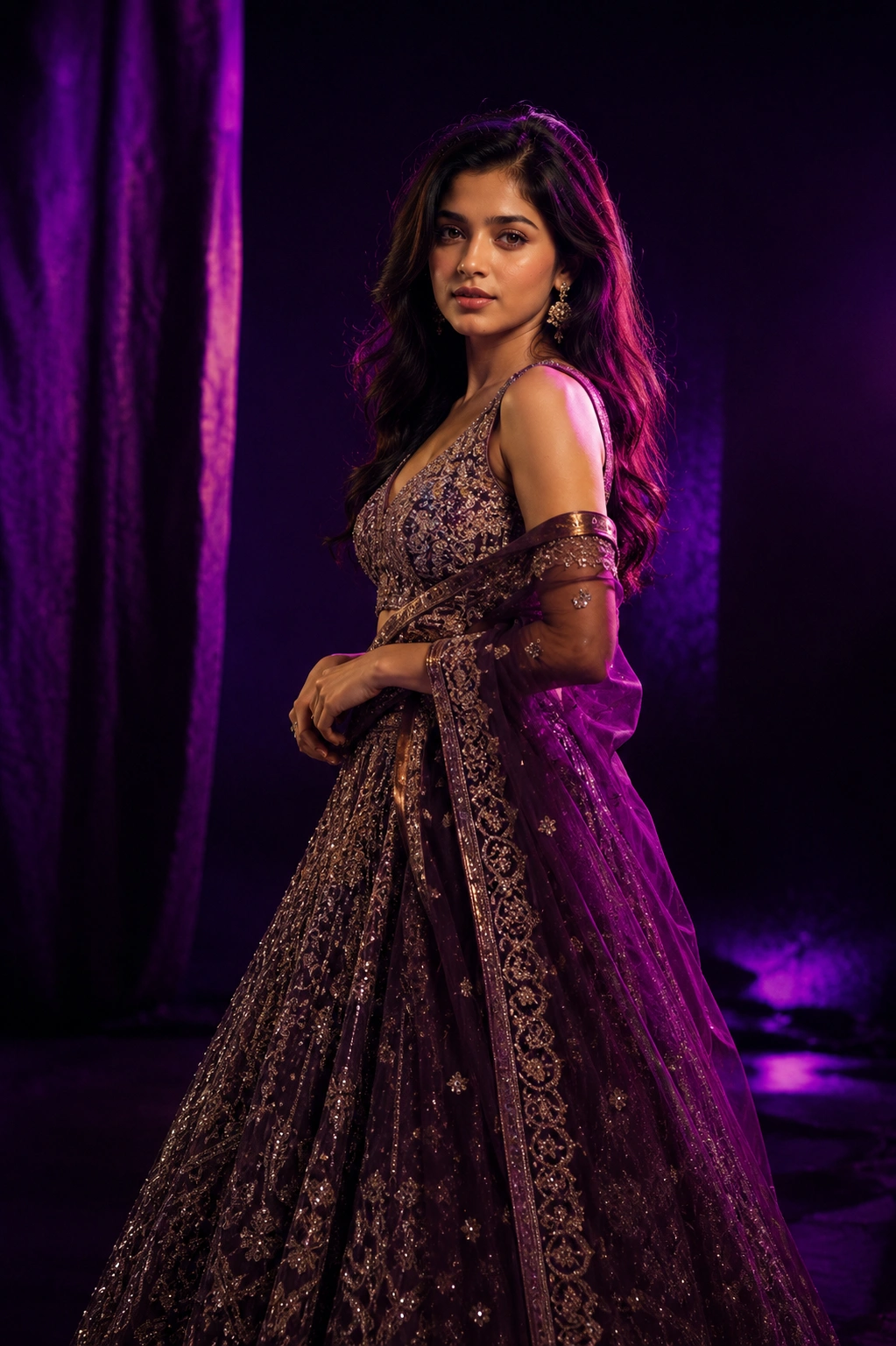
Every clothing brand faces the same catalogue problem: garments on hangers or flat lays do not sell as well as garments on bodies. Buyers want to see how a kurta falls on a figure, how a lehenga moves, whether a dupatta drapes the way it's meant to. Traditional model shoots solve this but cost ₹20,000–₹1,50,000 per session and take 1–3 weeks. An AI fashion model solves the same problem in 24–72 hours at a fraction of the cost.
What an AI Fashion Model Does for Your Clothing Brand
An AI fashion model is a photorealistic digitally generated figure styled to wear your specific garment. The model's skin tone, body proportion, hair, expression and background are all directed by your brief. The output looks like a professional model photo or video — the distinction is that no physical shoot took place.
For clothing brands in Ahmedabad's textile district, Surat's saree market, or D2C apparel labels shipping across India, the value is immediate: every garment in your catalogue can be shown on a figure without the cost and logistics of repeated model shoots. New drops can be imaged and posted within two days of production approval rather than three weeks after a scheduled shoot.
What AI Models Show That Flat Lays Cannot
Flat lay product photography shows the garment in isolation, which tells the buyer very little about fit, proportion or how the piece looks when worn. An AI model image shows the neckline in context, how the waist sits on a real body shape, how long the hem falls relative to a human figure, and how the overall silhouette reads when styled and worn. These are the exact questions buyers ask before purchasing clothing, and flat lays cannot answer them.
In video format, AI fashion models can also show gentle movement — the natural swing of a skirt, the drape of a dupatta in motion, the way fabric catches light as the figure moves. This is especially relevant for ethnic wear categories (lehengas, sarees, anarkalis) where the movement of the garment is central to its appeal and a still photo cannot convey it.
Tegvo's AI Model Tia for Fashion Brands
Tia are Tegvo's two AI model personas, built specifically for Indian brand contexts. Both can be styled in traditional ethnic wear, contemporary fusion and western categories with South Asian aesthetic sensibility that global AI tools frequently miss — appropriate draping techniques, culturally relevant jewellery pairings, and skin tones that represent the Indian buyer realistically.
When you brief Tegvo with a garment, you can specify which model persona fits the aesthetic: Tia for a more traditional, festive styling context; Tia for contemporary, urban and fusion looks. Both can be adapted across these contexts based on your specific collection's mood and target audience.
AI Fashion Model vs Traditional Model Shoot for Clothing
| Factor | AI Fashion Model | Traditional Model Shoot |
|---|---|---|
| Cost per garment | ₹2,000–₹8,000 | ₹20,000–₹1,50,000+ per session |
| Turnaround | 24–72 hours | 1–3 weeks |
| Model specification | Any skin tone, proportion, pose on brief | Limited by available talent |
| Fabric movement (video) | Achievable — gentle, stylised motion | Natural, unrestricted |
| Volume scalability | Unlimited — same brief covers 50 garments | Each shoot is a new booking and cost |
| Seasonal speed | New drop imaged and posted in 48 hrs | Requires advance booking weeks ahead |
| Authentic human feel | Very realistic — AI-generated | Fully authentic |
Send your clothing images on WhatsApp — Tegvo delivers styled AI model visuals in 24–72 hrs.
Clothing Categories That Benefit Most
Ethnic wear — lehengas, sarees, anarkalis, sharara sets, salwar suits — benefits enormously from AI model presentation because the silhouette and drape of these garments is the primary purchase driver. A saree that looks flat and shapeless folded on a shelf becomes a completely different proposition when shown draped on a figure with appropriate blouse styling and accessories.
Casual and western wear brands use AI fashion models for catalogue consistency — every product shown on the same model, same lighting style, same background aesthetic — which creates a professional, unified visual language that individual product shots on different backgrounds cannot achieve. D2C clothing brands in particular have adopted this approach to build the kind of visual cohesion that was previously only achievable with expensive repeat photoshoots.
How to Brief Tegvo for AI Fashion Model Visuals
A complete fashion model brief includes: clear photos of the garment (front, back, and any detail shots you want referenced), the model skin tone and hair preference, the styling context (casual, ethnic festive, office fusion, bridal), the background environment (plain studio, natural setting, interior), and the final use (Instagram catalogue, website product page, WhatsApp catalogue, Meta ads).
For seasonal drops — a Navratri collection of 15 lehengas, for instance — Tegvo works from a master brief that establishes consistent model styling across the entire range, so all 15 outputs look like they belong to the same cohesive campaign rather than 15 individually commissioned images.
Frequently Asked Questions
How does an AI fashion model display clothing accurately?
An AI fashion model is generated to wear a specific garment by compositing the clothing image onto a photorealistic AI figure with accurate body proportions and fabric physics. Tegvo's team directs this process — selecting appropriate model proportions, skin tone, pose and background to match the garment's positioning and target audience.
Can AI models show how clothing fabric moves or flows?
In video format, AI fashion models can show gentle fabric movement — a dupatta flowing, a lehenga hem swaying, a kurta draping naturally. For garments where movement is a key selling point (silk sarees, flowy dresses, lightweight dupattas), the video format of AI model output is more effective than still images at conveying the garment's appeal.
What clothing categories work best with AI fashion models?
Kurtas, salwar suits, ethnic fusion wear, sarees, lehengas, western casuals and formal apparel all work well. Categories that depend on very precise tailoring details — high-end bespoke suiting with specific construction — may still benefit from traditional model shoots for the finest detail work, though AI handles everyday and mid-market fashion very effectively.
Can I specify the body type or size for the AI fashion model?
Yes — Tegvo can adjust model proportions to represent different body shapes, heights and size ranges. For brands targeting plus-size audiences or wanting to show inclusive sizing, the AI model can be directed to reflect those proportions, which is a practical advantage over traditional shoots where casting specific body types requires additional talent sourcing.
How many garments can I show in one AI fashion model project?
Each video or image covers one garment or outfit combination. A standard project brief covers 3–10 garments, each produced as a separate output. For brands wanting a full seasonal catalogue, a pack brief covering 10–20 garments is the most cost-efficient approach and ensures consistent visual style across the range.
Is it legal to use AI fashion models in clothing advertisements in India?
Yes — using AI-generated models in clothing advertisements is legal in India as of 2026, provided no real person is misrepresented. Platform advertising policies (Meta, Google) require labelling AI-generated content in paid promotions. Always check the current policies of the platform you're running paid campaigns on.
