

Attention on social feeds no longer waits for a brand to “warm up.” Viewers decide in the first one to two seconds whether a product feels worth watching. That shift has changed what a commercial must do: show the product clearly, create desire quickly, and leave a brand memory that survives the next swipe.
Static banners and single product photos still have a place in catalogues and search listings. On Instagram Reels, YouTube Shorts, paid social, and WhatsApp status, motion wins more often. Movement communicates texture, size, colour accuracy, and lifestyle fit in a way a still image rarely matches.
An AI product commercial is a short, product-led advertisement produced with generative image and video tools, then finished with human direction, editing, sound, and brand guardrails. In 2026, this format matters because brands need more creative variants than traditional shoots can deliver at the same speed or cost.
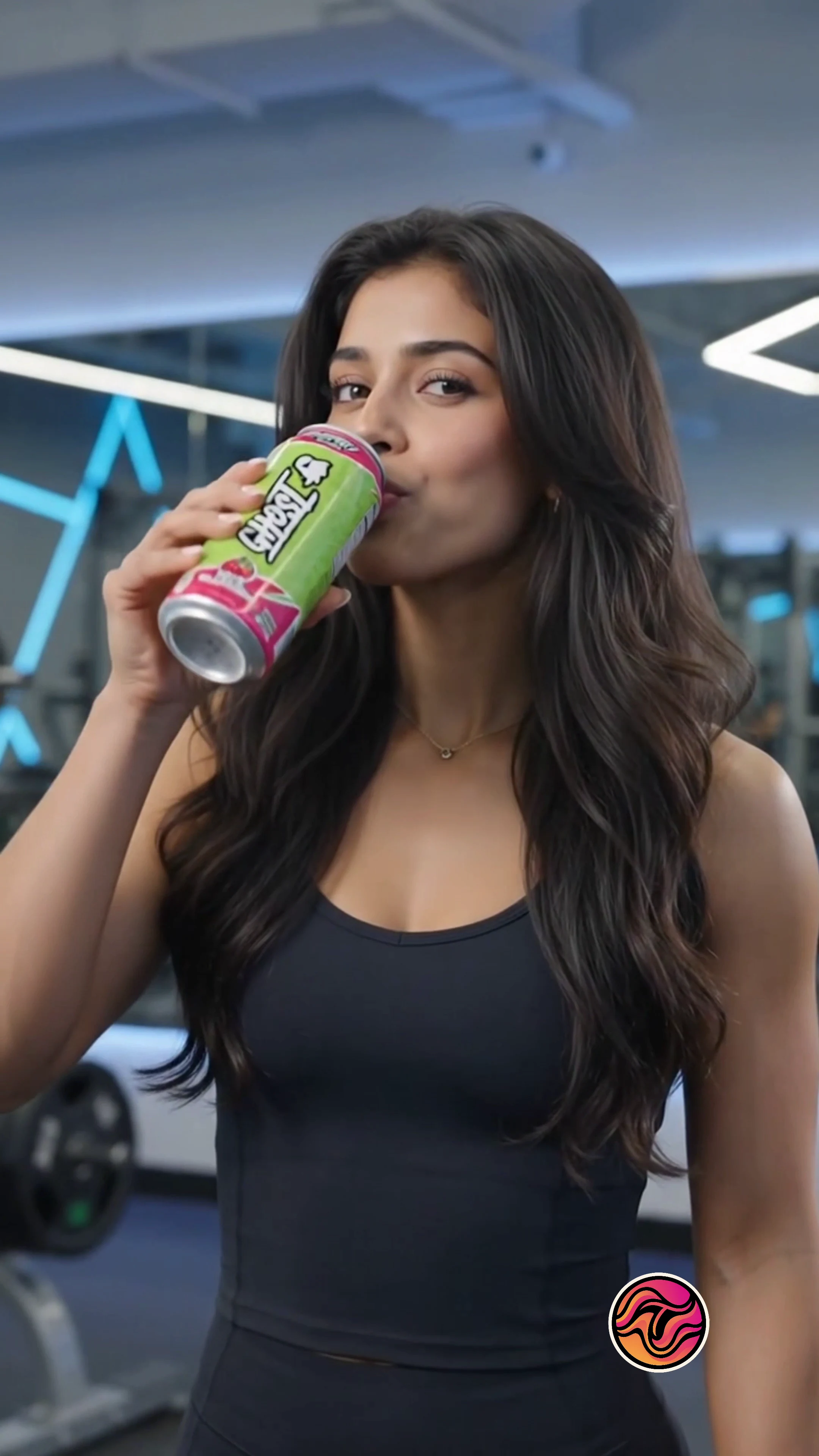
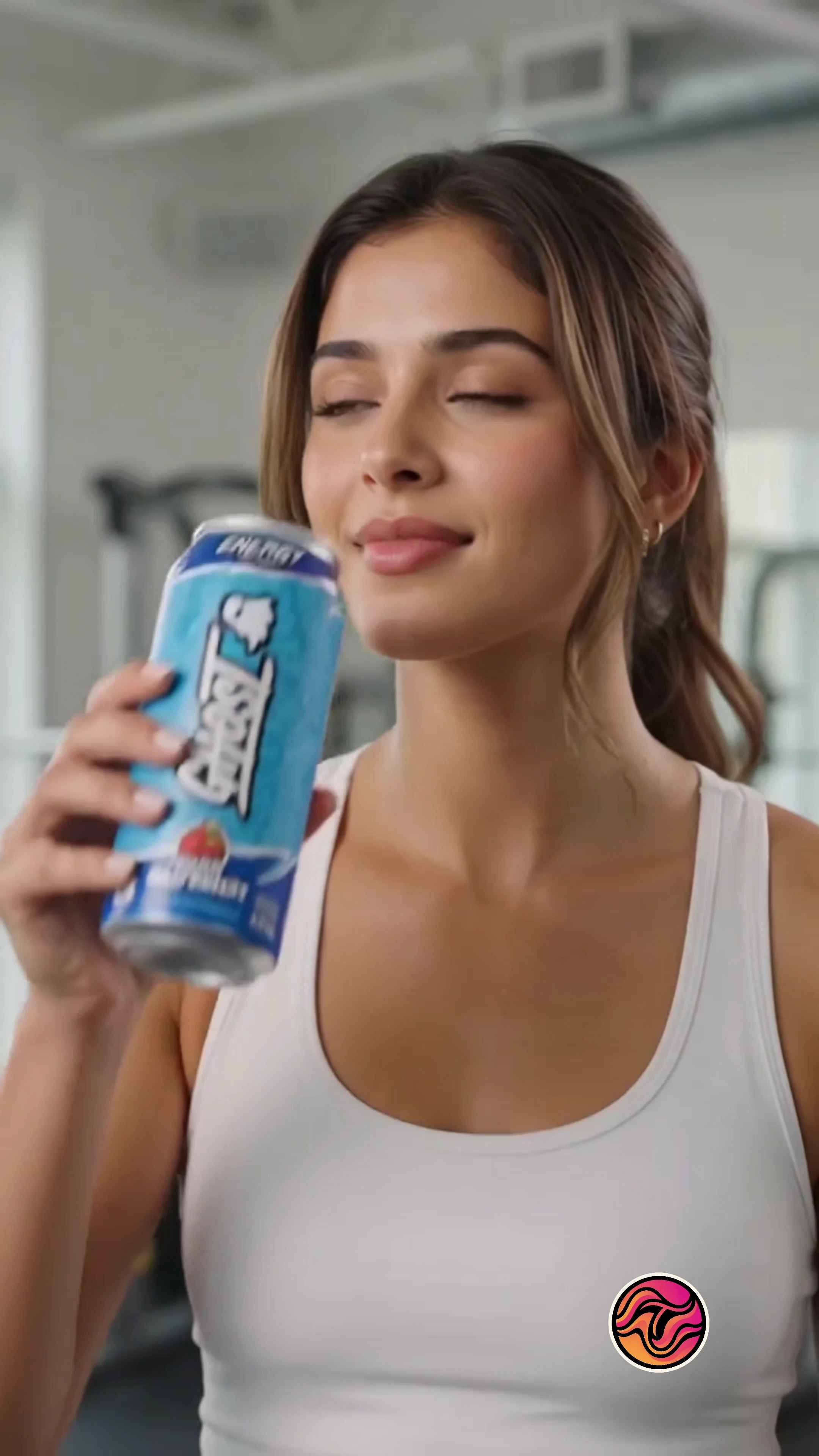
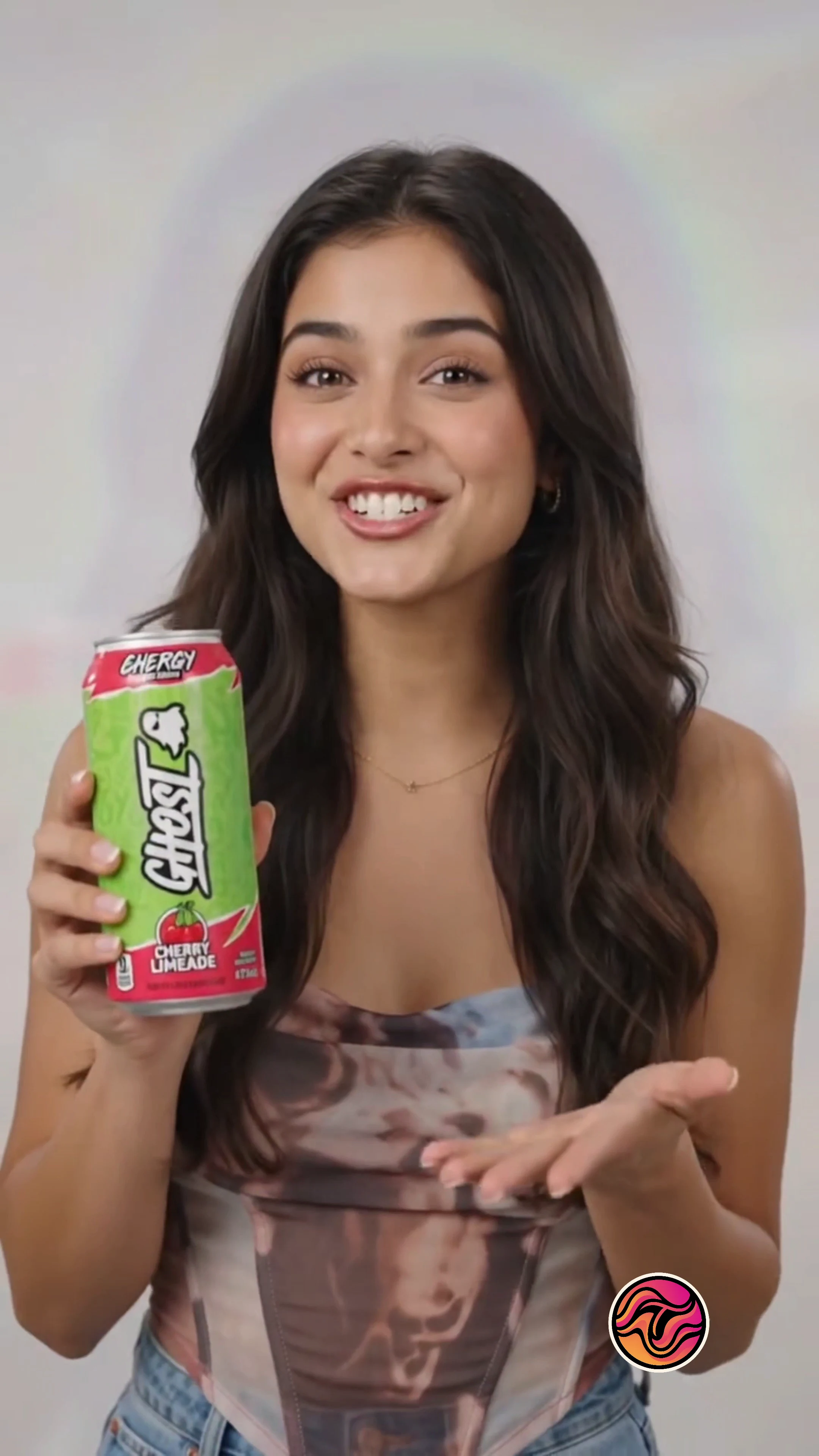
Throughout this guide we use a ~32-second vertical sample hosted at a 32-second vertical AI product commercial sample as an educational public marketing example. Observed frames show several women presenting and drinking bright energy-drink cans in gym and lifestyle settings, alternating talent and can variants, with macro packaging close-ups, bright clean lighting, shallow depth of field, energetic cuts, and product-forward composition.
Important: This is an independent educational analysis, not official GHOST content. Tegvo is not affiliated with or endorsed by GHOST. We analyse only visible creative choices. We do not claim campaign performance, media spend, conversion rates, or any inside knowledge of the brand’s marketing programme.
If you run a D2C label, beverage line, jewellery brand, hotel, beauty brand, or ecommerce catalogue, the craft lessons below transfer — even when your category looks nothing like energy drinks.
Why Premium Product Commercials Matter
Consumer psychology
People do not buy cans, bottles, rings, or rooms in the abstract. They buy a feeling of confidence, energy, care, status, or relief. A premium commercial compresses that feeling into a short sequence: who the product is for, how it looks in real life, and why it belongs in the viewer’s next decision.
When lighting is clean and packaging is sharp, the brain reads “trustworthy.” When cuts feel intentional, the brain reads “professional.” When the product stays in frame with purpose, the brain remembers the object — not only the vibe.
Brand perception
Premium does not always mean expensive production. It means consistency: colour accuracy, readable logos, controlled backgrounds, and talent that matches the brand’s audience. Low-quality motion can make a strong product look uncertain. High-quality motion can make a new product look established.
Conversion and product trust
Shoppers who cannot inspect a product in person lean on visual proof. Close-ups of labels, condensation, fabric drape, metal shine, or room ambience reduce uncertainty. That is especially important for first-time buyers and for categories where packaging design carries much of the brand story.
Social media performance
Short-form platforms reward clarity and pace. A commercial that opens on the product, varies shots without chaos, and ends on a recognisable pack shot is easier to watch with sound off and easier to remember with sound on.
Website and store conversion
On a product page, a short commercial next to specs can answer questions photos leave open: scale, usage context, and finish. On ecommerce and Amazon listings, motion often lifts engagement with the listing experience — without promising any specific revenue outcome here.
Paid advertising
Paid social needs creative testing. Traditional shoots struggle when a brand needs ten variants for different hooks, colours, or audiences. An AI-assisted commercial workflow makes variant production more practical, which supports structured testing. Results still depend on offer, targeting, and landing page quality.
Case Study: What Makes This Energy-Drink Style Commercial Effective?
Scope of analysis: Visible creative craft in the uploaded ~32-second vertical video only.
Disclaimer (read carefully): This section is an independent educational analysis. It is not official GHOST content. Tegvo is not affiliated with, sponsored by, or endorsed by GHOST. Any resemblance to GHOST packaging or brand colours is treated as a public marketing example for teaching composition, lighting, and editing — not as a claim of partnership, endorsement, or campaign results.
Overall structure
The clip behaves like a product-led montage rather than a dialogue film. Talent appears in gym and lifestyle settings; cans are presented and consumed; packaging gets dedicated macro time; cuts move quickly enough to feel energetic without becoming unreadable. The product remains the protagonist.
Visual storytelling
Story here is simple and commercial: active people + bright cans + consumption moments = “this belongs in an energetic lifestyle.” There is no need for a long plot. The narrative is association: product, place, person, repeat.
For brand teams, that is a useful template. Many product categories benefit from association storytelling more than from mini-dramas — especially when the goal is recognition and desire in under 30–40 seconds.
Lighting
Observed lighting is bright and clean. Faces and cans are readable. Shadows do not hide logo areas. Bright lighting supports a “fresh / performance / daytime” mood and keeps label colours vivid on phone screens.
Lesson: for beverage and FMCG commercials, underexposed “moody” looks often hurt pack readability. Premium can still mean bright.
Macro product shots
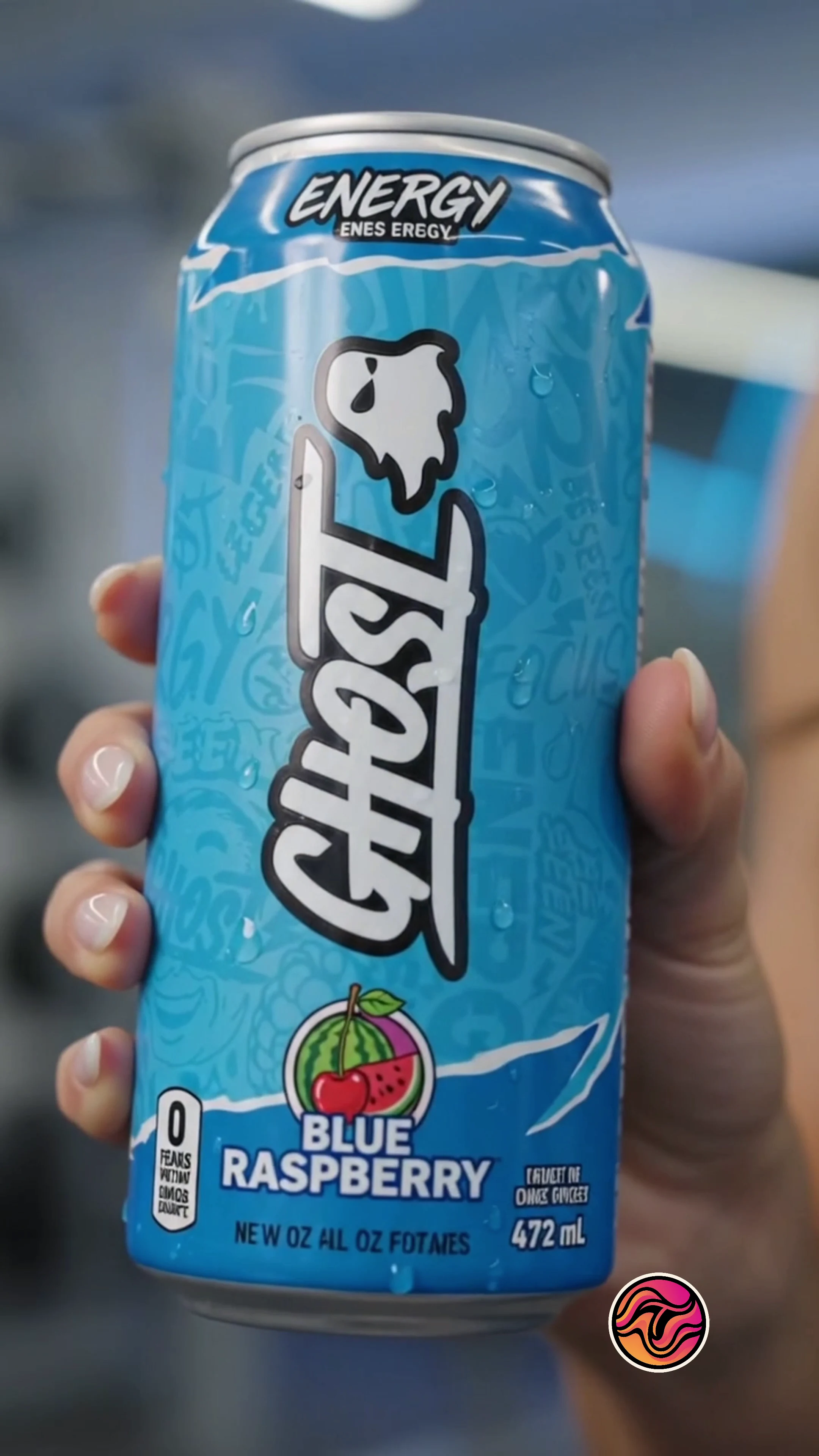
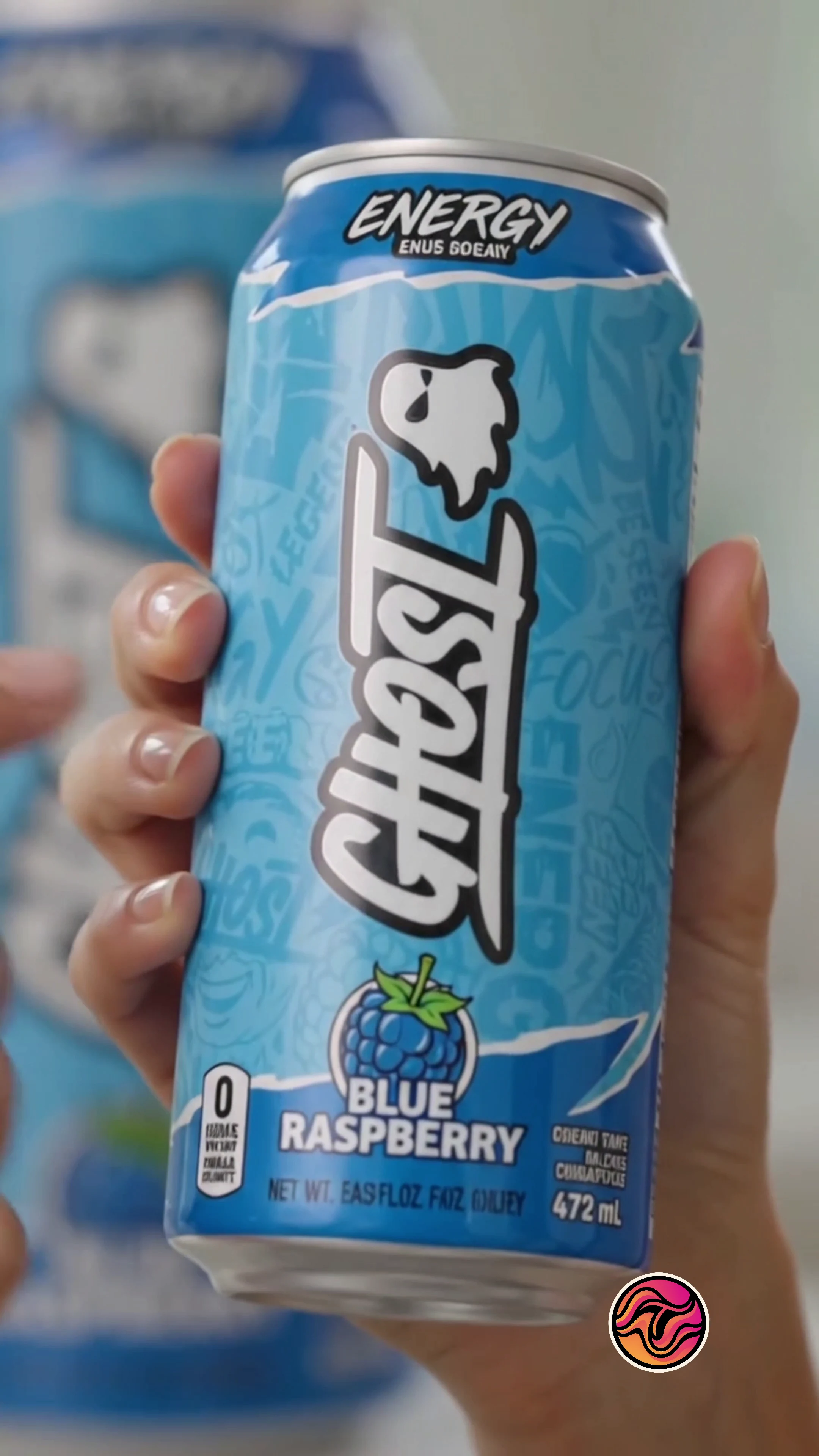
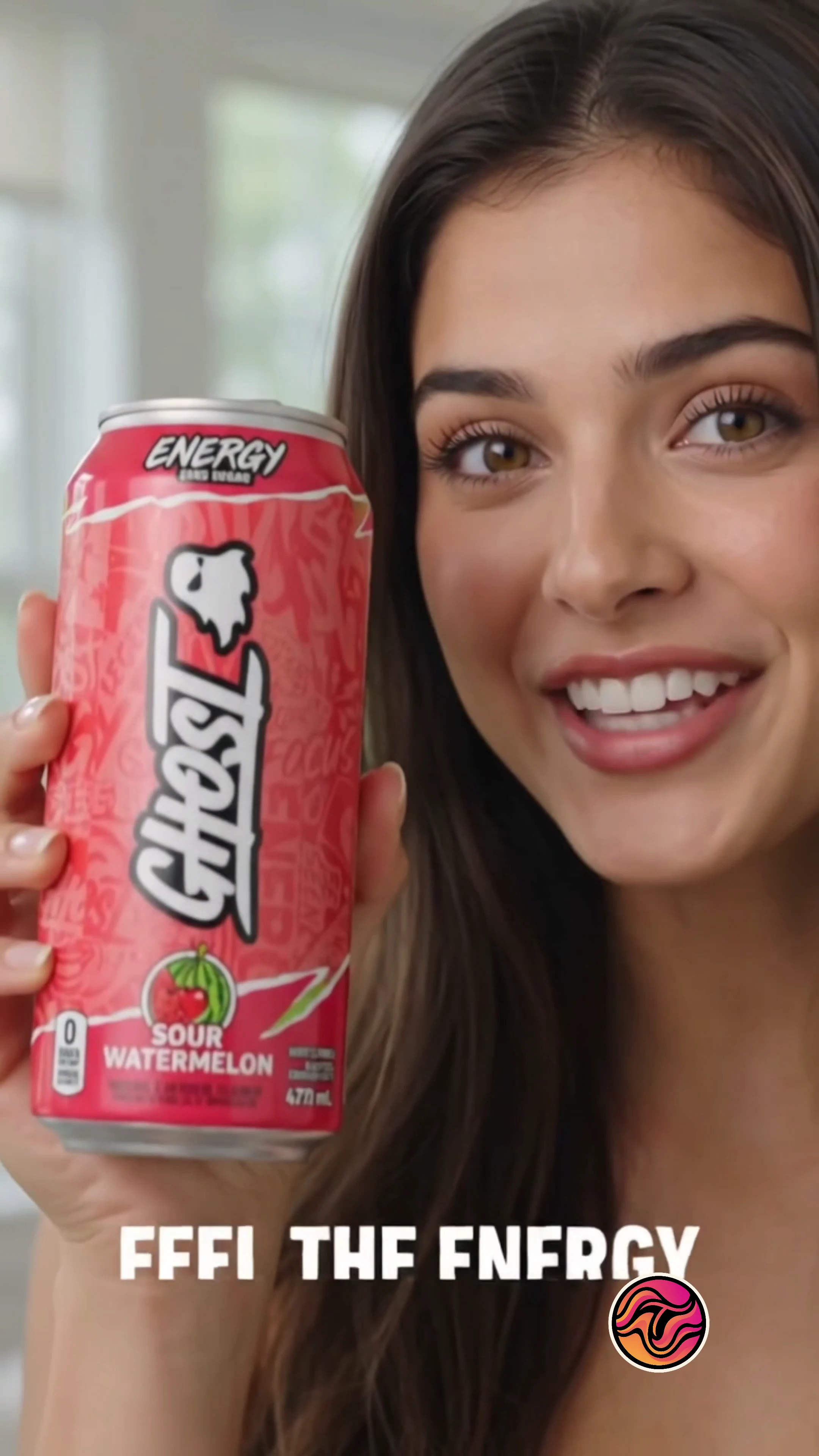
Macro packaging close-ups appear to do three jobs:
- Prove the object is the hero.
- Let viewers read design details that establish brand identity.
- Create texture — metal, condensation cues, colour blocks — that stills alone often flatten.
Macro inserts also give editors breathing room between talent shots so the edit does not become only face-to-face cuts.
Packaging focus
Alternating can variants keeps attention on the object while preventing visual fatigue. The commercial does not treat packaging as background decoration. It treats packaging as the message.
If your brand sells through design-led packaging (energy drinks, perfume, skincare, confectionery), this is the core craft lesson: spend intentional seconds on the pack, not only on lifestyle atmosphere.
Transitions and energetic cuts
Cuts are short and purposeful. The pace matches the category energy without requiring flashy transition effects. Hard cuts and quick shot changes create momentum; the product remains the visual anchor between talent changes.
Lesson: energy comes from shot design and timing more than from transition gimmicks.
Motion and camera language
Framing feels product-forward. Talent presents and drinks; the can stays prominent. Shallow depth of field separates subject from background, which helps phone viewing where backgrounds can otherwise compete.
Camera language appears controlled rather than chaotic handheld for its own sake. Controlled motion usually reads more premium in commercial work.
Colour palette
Bright cans against relatively clean gym/lifestyle environments create strong colour contrast. High-chroma packaging pops on OLED phone screens. Colour consistency across shots helps the commercial feel like one campaign, not a collage of unrelated clips.
Premium branding signals
Premium signals in this example are craft signals, not budget claims:
- Readable logos and label hierarchy
- Clean lighting
- Shallow focus
- Alternating talent without losing product continuity
- Dedicated packaging inserts
- Vertical composition suited to Reels/Shorts/Stories
Again: this is educational observation only. It does not claim how GHOST markets, spends, or performs. Tegvo is not affiliated with or endorsed by GHOST.
Composition
Product-forward composition means the can occupies meaningful frame real estate, often near centre or along clear visual lines. Hands and faces support the product rather than replace it. For AI commercial briefs, write composition rules explicitly: “can fills X% of frame,” “logo readable,” “no crop of key label area.”
What brands should copy (craft) vs what they should not copy (claims)
Copy the craft: product hero shots, bright readable lighting, macro inserts, vertical pacing, variant rotation, shallow depth of field.
Do not invent claims: do not imply partnership, do not invent testimonials, do not fabricate performance metrics, do not present this analysis as official brand creative direction.
How AI Can Produce Similar Product Commercials
An AI product commercial is not “one prompt → finished ad.” High-quality results come from a directed pipeline. Below is an end-to-end workflow brands and studios commonly use in 2026.
1. Concept
Define the job of the film in one sentence. Example: “Show the can as a bright lifestyle essential for gym-going adults in under 35 seconds.”
Capture:
- Audience
- Offer or message (without illegal health claims where restricted)
- Platforms (Reels, Shorts, paid social, website)
- Aspect ratio (usually 9:16 first)
- Must-show pack details
- Tone words (bright, energetic, clean, premium)
2. Storyboarding
Board 8–14 shots before generating. Typical beverage board:
- Pack hero on clean surface
- Talent enters frame with can
- Mid-shot presentation
- Drink moment
- Macro label
- Alternate talent + alternate can colour
- Lifestyle wide
- Final pack lockup
Storyboards prevent random generation and reduce revision loops.
3. Image generation / product locking
Start with accurate product references: real photos of the packaging from multiple angles. Generate or composite scenes where the product remains consistent. Product consistency is the hardest and most important step. If the logo drifts, the commercial fails commercially even if faces look cinematic.
4. Video generation
Convert approved stills or motion prompts into short clips. Prefer multiple short takes over one long unstable generation. Keep identity, wardrobe, and pack design locked across takes.
5. Animation and motion enhancement
Add subtle camera pushes, parallax, or controlled object motion where generation alone feels static. Avoid over-animation that makes packaging look fake.
6. Editing
Assemble for phone-first viewing:
- Hook in first second
- Alternate talent and pack
- Insert macros every few beats
- End on a clear product frame
- Keep total length aligned to platform norms (often 15–35 seconds for social ads)
7. Motion graphics
Use sparingly: brand end-card, subtle product callouts, legal lines if required. Text-heavy overlays can fight packaging design in beverage ads.
8. Sound
Choose music that matches pace. Add light foley (can tap, pour, ambience) only if it supports realism. Always deliver a caption-friendly cut for sound-off viewing.
9. Colour grading
Grade for consistency across AI clips. Match white balance, saturation, and contrast so the edit feels shot as one unit. Protect label colours so brand hues remain accurate.
10. Delivery
Export masters and platform cuts:
- 9:16 primary
- Optional 1:1 / 16:9
- Clean version without burned-in text
- Version with captions if needed
- File naming for ads manager testing
Human review remains essential at every gate: legal, brand, product accuracy, and taste.
Traditional Commercial vs AI Commercial
The table below compares typical production patterns. Exact costs and timelines vary by market, talent, usage rights, and creative complexity. Figures are directional for planning conversations, not quotes.
| Factor | Traditional commercial shoot | AI product commercial workflow |
|---|---|---|
| Time to first cut | Often days to weeks (booking, shoot, edit) | Often hours to a few days after brief + product assets |
| Budget shape | Crew, location, talent, equipment, travel | Directed AI production + editing + revisions; usually lower fixed overhead |
| Crew | Director, camera, lighting, talent, styling, production | Creative lead, AI operators, editor, optional motion/sound specialists |
| Flexibility | Reshoots are expensive | Variant hooks, colours, talent looks, and backgrounds are easier to explore |
| Revisions | Limited by shoot capture | More room to adjust scenes if product lock and brand rules are clear |
| Speed to market | Strong for flagship films; slower for many social variants | Strong for always-on social and test creatives |
| Best use | Flagship brand films, complex live action, regulated on-camera claims needing controlled talent | Product launch clips, Reels/Shorts ads, catalogue motion, rapid A/B creative |
| ROI pattern | High impact when one film carries a long campaign | Efficiency when many variants must be tested continuously |
Practical takeaway: Many brands use both. Traditional for hero moments; AI product commercials for volume, speed, and platform-native testing. Neither replaces strategy, offer quality, or compliance.
Industries That Benefit From AI Product Commercials
1. Jewellery
Macro sparkle, skin tone matching, festive styling, and rapid SKU coverage without booking a full model cast for every design.
2. Hotels
Room reveals, amenity close-ups, lifestyle guests in lobby/pool contexts, and seasonal promo cuts for OTA and Instagram.
3. Restaurants
Dish hero shots, steam and texture emphasis, chef plating moments, and festival menu promos for Reels and WhatsApp.
4. Energy drinks
Pack-forward lifestyle montages, gym/outdoor association, flavour/colour variant rotation, and bright vertical ads — similar craft patterns to the educational example discussed above (independent analysis only; not official GHOST content; Tegvo not affiliated with or endorsed by GHOST).
5. Supplements
Clean label readability, usage context (morning routine, training bag), and trust-building pack macros. Keep health claims compliant with local advertising rules.
6. Fashion
Outfit motion, fabric behaviour, lookbook sequences, and festive drops without full studio casting for every SKU colourway.
7. Beauty
Texture demos, packaging glamour, shade range grids in motion, and routine storytelling in short vertical form.
8. Perfume
Bottle hero cinematography, mist/atmosphere accents, luxury colour grades, and gift-season variants.
9. Furniture
Room-scale context, material close-ups, modular configuration variants, and “space aspiration” lifestyle frames.
10. Healthcare / wellness brands (non-diagnostic marketing)
Facility ambience, product or service explainers, and trust-led visuals. Avoid medical claims the footage cannot support; follow advertising and regulatory guidance.
11. Real estate
Walkthrough-style sequences, facade/lifestyle pairing, and project launch teasers for paid social.
12. Apps and software
UI motion combined with lifestyle context, feature highlight commercials, and launch ads where the “product” is a screen experience plus human outcome.
Across all twelve, the shared rule is the same: put the product (or clear product proxy) on screen early, keep identity consistent, and design for mute-autoplay feeds.
Best Practices for AI Product Videos
- Write a one-sentence commercial job before any generation.
- Collect real product photos from multiple angles with true colours.
- Lock logo and label rules so AI cannot invent packaging details.
- Storyboard shot list with hook, proof, lifestyle, and pack close.
- Design for 9:16 first; derive other ratios later.
- Open on the product within the first second when possible.
- Alternate talent and packaging to keep energy without losing focus.
- Insert macro shots to build trust and texture.
- Prefer bright, readable lighting for FMCG and ecommerce packs.
- Use shallow depth of field carefully — blur backgrounds, not logos.
- Keep colour grading consistent across generated clips.
- Limit on-screen text so packaging remains the message.
- Create a sound-off readable cut with clear visual hierarchy.
- Match music tempo to cut tempo; do not overpower.
- Export a clean master without burned platform UI.
- Plan variant hooks for paid testing (problem, proof, lifestyle, offer).
- Review legal and claims before publishing, especially food, drink, health, finance.
- Check hands, edges, and label warping frame by frame.
- Keep talent casting aligned to real audience demographics you serve.
- End on a memorable pack lockup for brand recall.
- Name files for testing (
brand_product_hookA_9x16_v1). - Document brand do/don’t for future commercials so quality compounds.
- Use AI for volume, humans for judgement — taste is still a competitive advantage.
- Align landing page visuals with the commercial’s product appearance.
Mistakes Brands Should Avoid
- Treating one lucky generation as a finished ad without edit discipline.
- Allowing logo drift or invented packaging text.
- Hiding the product behind lifestyle atmosphere.
- Overusing heavy filters that falsify true product colour.
- Copying another brand’s identity so closely that viewers feel confused or the work feels derivative — especially when using public examples for learning. Educational study is fine; implying affiliation is not. This article’s energy-drink example is independent analysis only; Tegvo is not affiliated with or endorsed by GHOST.
- Stuffing too many claims into a 20-second film.
- Ignoring mute viewing (no visual clarity without audio).
- Using chaotic transitions that reduce perceived quality.
- Mismatched talent that conflicts with category trust.
- Skipping storyboards, which causes expensive revision churn.
- Publishing without legal review in regulated categories.
- Making performance promises the creative cannot support.
- Inconsistent aspect ratios that crop critical pack details.
- No final pack shot, so memory ends on a random face instead of the product.
- Low-resolution exports that look soft on modern phones.
- Endless unfocused variants with no testing hypothesis.
- Forgetting captions/accessibility when dialogue or voiceover matters.
- Assuming AI removes the need for brand strategy — it does not.
How Tegvo Creates AI Product Commercials
Tegvo is an Ahmedabad-based AI creative studio that helps brands produce AI video marketing assets for social, ads, and digital product presentation. Work typically moves through a WhatsApp-first process: discover, plan, create, deliver.
What brands usually request
- AI product commercials and short AI product videos
- Brand ads for Instagram Reels and YouTube placements
- Website product videos
- Jewellery videos and fashion look motion
- Hotel videos and restaurant promotions
- Supportive stills / product photography direction for better source assets
How the process works in practice
- Discover — Share product photos, category, platform goals, deadline, and references on WhatsApp.
- Plan — Confirm scope, shot intent, aspect ratios, revision rounds, and timeline.
- Create — Directed AI generation, product consistency checks, editing, optional motion graphics and sound.
- Deliver — Final MP4 files via WhatsApp and email, with commercial usage clarified in the order scope.
Typical custom AI model promo timelines are often in the 24–72 hour range after a clear brief and usable product photos — depending on complexity, variants, and revision needs. Exact timing is confirmed per project.
Tegvo does not claim affiliation with any third-party beverage brand referenced as an educational example in this article. The energy-drink style analysis above is independent educational commentary, not official GHOST content, and Tegvo is not endorsed by GHOST.
Where this fits in a marketing system
An AI product commercial works best when connected to:
- A clear offer
- A landing page or catalogue path
- Paid or organic distribution
- A testing plan for creative variants
Creative quality improves results only when the rest of the funnel is coherent.
How to Brief Your First AI Product Commercial
A strong brief is the difference between cinematic noise and a commercial that sells. Before you message a studio, decide the job of the film in one sentence. Are you launching a new SKU, refreshing always-on creative, testing paid hooks, or building website proof beside product specs?
Collect product photos that show true colour, label hierarchy, and multiple angles. If packaging has fine print, regulatory marks, or metallic finishes, photograph those details clearly. AI can invent atmosphere quickly; it cannot invent accurate packaging from a blurry phone shot.
Define platform and length early. Most brands should start with a vertical 9:16 master between 15 and 35 seconds, then derive feed or landscape cuts only if needed. Write three hook options: product-first, lifestyle-first, and offer-first. Ask for one clean master without burned-in text and one captioned version for mute viewing.
Finally, list what must never appear: wrong claims, competitor colours, unsupported health language, or off-brand talent. That negative brief protects quality as much as the positive creative references. When the brief is clear, AI production becomes faster because the team spends less time guessing and more time refining product accuracy, pacing, and premium finish.
Related guides: AI product video cost in India · turn product photos into video ads · AI model vs real model · AI video marketing service.
Frequently Asked Questions
What is an AI product commercial?
A short product-led advertisement created with generative image and video tools, then finished through human direction, editing, sound, and brand review.
How is an AI product commercial different from a normal product photo?
Photos show one moment. A commercial adds motion, pacing, lifestyle context, and sequenced visual proof that often performs better in short-form feeds.
Can AI commercials replace traditional shoots completely?
Not always. Many brands combine both: traditional production for flagship live-action needs, and AI for speed, variants, and always-on social creative.
What makes a beverage AI commercial look premium?
Readable packaging, clean lighting, controlled colour, macro inserts, and product-forward composition that keeps the can or bottle as the hero.
Is the energy-drink example in this article an official GHOST campaign case study?
No. It is an independent educational analysis of visible creative choices in a public-style marketing example. It is not official GHOST content. Tegvo is not affiliated with or endorsed by GHOST.
Does Tegvo work with GHOST or represent GHOST?
No. Tegvo is not affiliated with, sponsored by, or endorsed by GHOST.
What files should I send to start an AI product video?
Clear product photos from multiple angles, brand colours if available, target platform, desired length, and any must-include pack details.
What length works best for AI product ads?
Many social ads work in the 15–35 second range, but the right length depends on platform placement and message complexity.
Do I need 9:16 and 16:9 versions?
Start with 9:16 for Reels, Shorts, and Stories. Add 16:9 or 1:1 when placements require them.
How important are macro packaging shots?
Very — especially for design-led products where label, colour, and form drive recognition and trust.
Can AI handle jewellery sparkle and metal detail?
Yes, with careful prompting, reference images, and human quality control for reflections and stone readability.
Are AI commercials useful for hotels and restaurants?
Yes for ambience, dish heroes, room reveals, and seasonal promos — with honest representation of real venues and food.
Will AI videos work for Amazon or ecommerce listings?
They can support listing engagement and brand stores when platform media rules allow video and when product appearance stays accurate.
How many creative variants should a brand test?
Enough to learn — often several hooks — but not so many that analysis becomes noise. Start with a clear hypothesis per variant.
What is the biggest quality risk in AI commercials?
Product inconsistency: warped logos, wrong colours, or unstable packaging geometry.
How fast can Tegvo deliver?
Many custom AI promo videos are delivered in about 24–72 hours after brief and product photos, subject to scope and revisions.
Do I need to visit Ahmedabad?
No. Briefing and delivery are commonly handled remotely via WhatsApp and email.
Can AI commercials include voiceover?
Yes. Voiceover should be planned in the storyboard so pacing and captions remain clear.
Are health or performance claims allowed in supplement and energy creatives?
Only where local advertising rules allow them. When unsure, keep creative to lifestyle association and verified product facts.
What should a good brief include?
Audience, platforms, product must-shows, tone, references, a do-not-show list, timeline, and a clear success definition.
How do AI product commercials support paid ads?
By enabling faster creative testing across hooks and visuals. Media results still depend on targeting, offer, and landing experience.
What industries benefit most right now?
Jewellery, fashion, beauty, perfume, hotels, restaurants, beverages, supplements, furniture, healthcare marketing, real estate, and app or software launches — whenever product visibility matters.
Need an AI Product Commercial for Your Brand?
Tegvo helps brands create premium AI-powered commercials for products, hotels, jewellery, restaurants, ecommerce, fashion, and startups — with a clear WhatsApp briefing process and digital delivery.
If you want a product-led commercial designed for modern feeds, share your product photos and goals.
Bring:
- 3–5 clear product images
- Target platforms
- Preferred length
- Any brand guidelines
- Deadline
You will receive scope, timeline, and next steps — without inflated promises.