
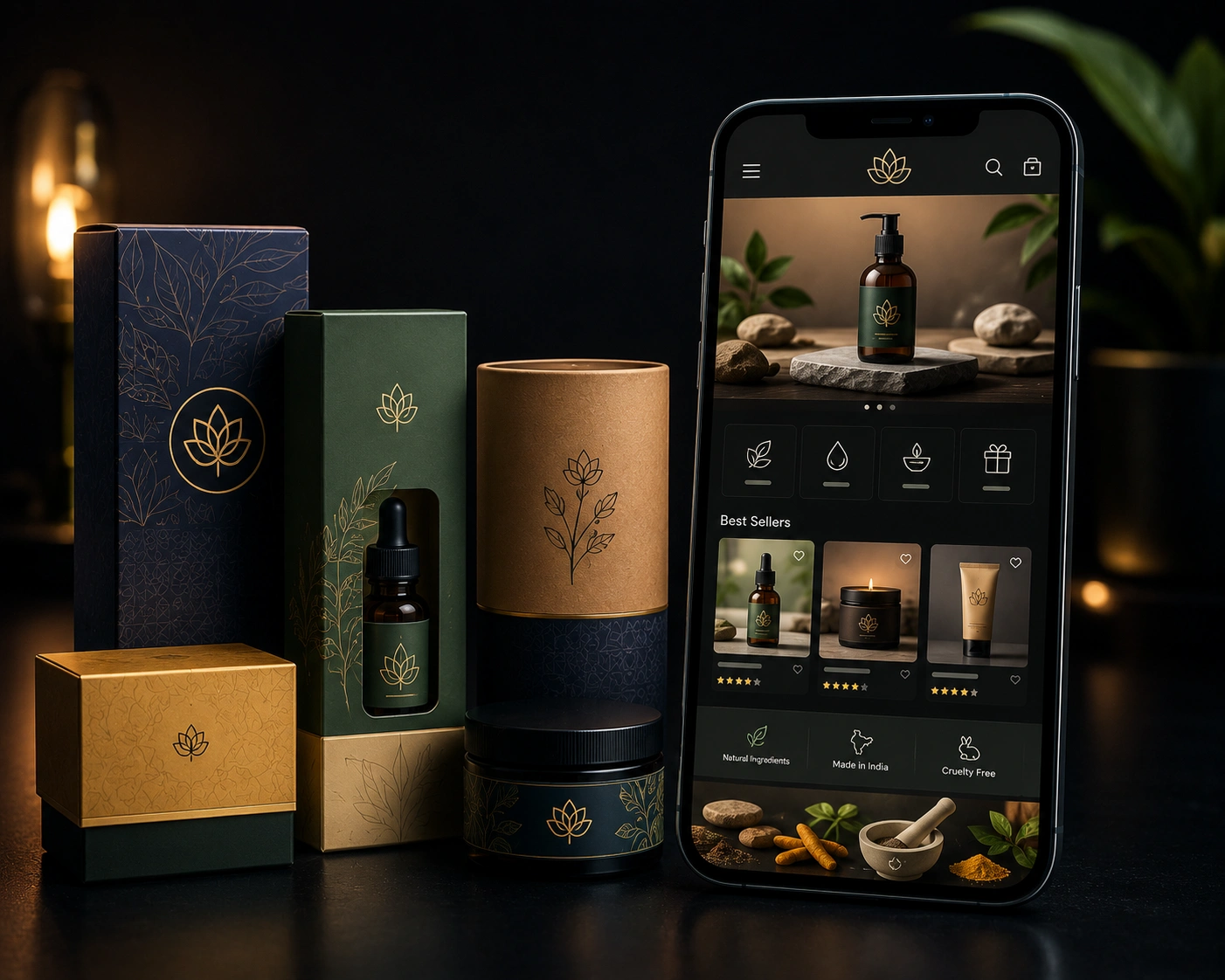
Every Indian D2C brand founder eventually asks the same question: do we need our own app? The answer depends on where the brand is in its growth curve. Building an ecommerce app for D2C brands before the audience exists to justify it is one of the most common early-stage capital misallocations in the Indian startup ecosystem. This guide covers when to build, what to build, and what it will cost — so the decision is made on data, not FOMO.
When to Build Your D2C App
The two clearest signals that an app investment is justified are: a high repeat purchase rate among existing customers, and a meaningful push notification opportunity. If your customers buy once and don't return, an app adds friction without increasing LTV. If your customers buy regularly, push notifications for restocks, exclusive app-only offers and sale campaigns are a direct revenue channel that can justify the build cost within 6–12 months.
A practical threshold: when your brand has 1,000+ monthly active buyers and a repeat purchase rate above 25%, an app begins to make economic sense. Below that, the marketing budget that would go into app development almost always generates better return invested in performance ads, WhatsApp retention campaigns or SEO — all of which drive traffic to your existing website.
Core Features for a D2C Ecommerce App
The essential feature set for a version 1 D2C ecommerce app is deliberately narrow. Adding every feature you want from day one extends timelines and burns budget on functionality that most early users won't use:
- Product catalogue: Category browse, search and filter by price/size/colour, high-res product images with zoom
- Product detail page: Variant selection (size, colour), stock availability, multiple images, description
- Cart and wishlist: Persistent cart, save-for-later, coupon code application
- Checkout and payment: UPI, debit/credit cards, COD; address management; order summary
- Order tracking: Status updates from confirmed to dispatched to delivered; tracking link integration
- Push notifications: Order status, restock alerts, sale campaigns, abandoned cart recovery
- User account: Login via OTP, order history, address book, returns initiation
Version 2 additions — loyalty points, referral programme, AR try-on, subscription orders, personalised recommendations — should be explicitly planned for after the version 1 app proves traction with real users.
Shopify Mobile vs Custom App — What Indian D2C Brands Need to Know
| Factor | Shopify Mobile Storefront | Custom App (Flutter) |
|---|---|---|
| Build cost | ₹1,00,000–₹3,00,000 (configuration) | ₹3,00,000–₹8,00,000+ |
| Time to launch | 4–8 weeks | 12–20 weeks |
| Backend flexibility | Shopify ecosystem only | Any backend, any integrations |
| UPI support | Via Razorpay / Shopify Payments | Any gateway (Razorpay, Cashfree) |
| Custom features | Limited by Shopify APIs | Unlimited |
| Ongoing cost | Shopify plan fees + apps | Server hosting + maintenance |
| Best for | Shopify brands wanting fast app | Brands needing custom flows/backend |
Chat with Tegvo on WhatsApp — describe your brand and current sales volume to get a practical recommendation.
Payment Requirements for Indian D2C Apps
Any D2C ecommerce app targeting Indian customers in 2026 must support UPI — it is the dominant payment method, used in the majority of digital transactions. Debit and credit cards cover the remainder of digital payments. Cash on Delivery (COD) remains significant for Tier 2 and Tier 3 city customers and should be offered even if it increases return rates — the conversion lift in lower-tier markets typically outweighs the return rate increase.
Razorpay and Cashfree are the most common payment gateway choices for Indian D2C apps. Both support UPI, cards, net banking, and wallets in a single integration, are well-documented for Flutter, and have established track records with Indian ecommerce brands. EMI options (Bajaj Finserv, CardlessEMI) become relevant for brands selling products above ₹3,000–₹5,000 average order value.
When a Website Is Enough for a D2C Brand
For D2C brands under ₹1 crore ARR, a fast, well-designed mobile-first website typically produces better ROI than a native app. The website can rank on Google, receive paid traffic from Meta and Google Ads, support WhatsApp chat for pre-purchase queries, and deliver a checkout experience that converts well on mobile. The audience and repeat purchase data gathered on the website then informs the app's feature prioritisation when the time comes.
A useful test: check what percentage of your website orders come from returning customers. If it's under 20%, your retention problem is a marketing and product problem — an app won't fix it. If it's above 30–35%, app push notifications become a credible incremental revenue channel worth investing in.
Frequently Asked Questions
When should a D2C brand build its own ecommerce app?
When the brand has 1,000+ monthly active buyers and a repeat purchase rate above 25%. Below that threshold, the marketing budget is almost always better spent on performance ads, WhatsApp retention or SEO — all driving traffic to the existing website. App push notifications are the primary ROI driver that justifies the investment.
What features does a D2C ecommerce app need?
Essential version 1 features: product catalogue with search and filter, variant selection, cart and wishlist, UPI + card + COD checkout, order tracking, push notifications, and user account with order history. Loyalty, referrals, AR try-on and subscription orders belong in version 2 after the core flow is validated.
How much does a D2C ecommerce app cost to build in India?
A core D2C ecommerce app (catalogue, cart, checkout, order tracking) built on Flutter in India costs ₹3,00,000–₹8,00,000. A more feature-rich version with loyalty, referrals and a full admin dashboard costs ₹10,00,000–₹20,00,000+.
Should a D2C brand build a custom app or use Shopify Mobile?
Brands already on Shopify should evaluate Shopify's mobile storefront first — faster (4–8 weeks), lower cost (₹1–3L), and works within the existing Shopify ecosystem. Custom development is appropriate when specific features are needed that Shopify cannot support, or when the brand has a proprietary backend.
Is a website enough for an Indian D2C brand in 2026?
For most brands under ₹1 crore ARR, yes — a well-built responsive website with WhatsApp support is sufficient. The decision to build an app is justified when push notification revenue from a large repeat buyer base outweighs the ₹3–8L build investment and ongoing maintenance.
What payment methods must a D2C app support in India?
UPI (dominant, 60–70% of digital transactions), debit and credit cards, and Cash on Delivery for Tier 2/3 markets. Razorpay and Cashfree cover all of these in a single integration. EMI options become relevant above ₹3,000–₹5,000 average order value.
